Opening Hours : Mon - Fri - 9am to 5pm
  Contact : 03 9592 2177

Coronary CT Angiography

treatment for coronary heart disease

State-Of-The-Art CT Scan For Your Heart - Melbourne

Get Ahead of Heart Disease with High-Quality CT Scanners in Melbourne
Melbourne Heart Care uses the latest in technology and medical advancements for imaging. When we take a CT scan of your heart in Melbourne, we use the imaging for early detection of potential heart attacks and to diagnose, assess and manage coronary artery disease as well as other heart health issues.
coronary artery disease treatment
CT scans for your heart at Melbourne Heart Care guide the diagnosis, management and treatment of heart diseases and can predict the risk of a heart attack.

What are cardiac CT Scans?

You may have heard the terms CT Coronary Angiography, CTCA or CT Coronary Angiogram. These terms are all used interchangeably to describe the Computed Tomography (CT) scan of your heart.

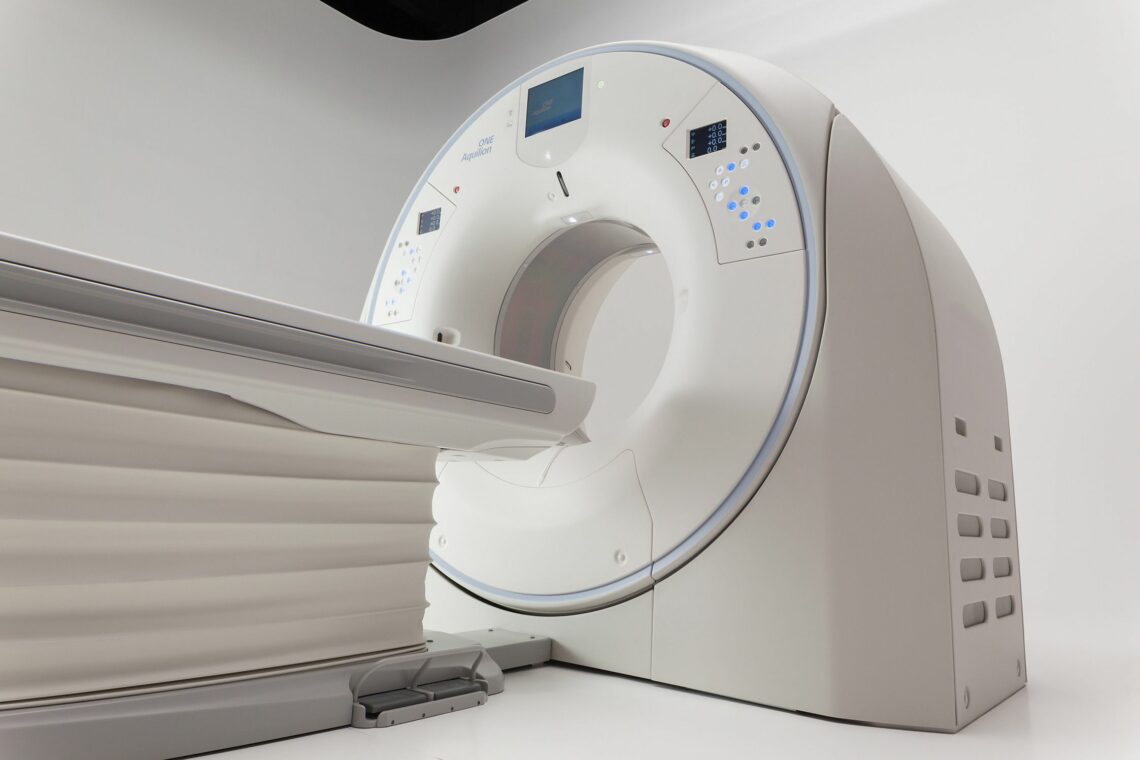
A Cardiac CT is more sensitive than a conventional X-ray, allowing doctors to detect more subtle changes in the heart’s structure and function. Using the Aquilion One Genesis for CT imaging, we create a three-dimensional picture that provides a highly detailed look at your heart for accurate diagnosis and management.

This highly detailed imaging allows early detection of cardiovascular disease that could potentially lead to a heart attack or other significant cardiac issues. The expert team at Melbourne Heart Care uses those results to tailor treatment to manage and prevent further cardiac damage.

Why do people need CT scans of their hearts?

There are many reasons your doctor or cardiologist may order a Computed Tomography (CT) of your heart and coronary arteries:

  • A strong family history of cardiac issues and intermediate risk factors.
  • A history of chest pain, shortness of breath or exercise intolerance.
  • For diagnosing coronary artery disease if symptomatic for CAD or other risk factors such as high blood pressure.
  • Early detection of issues with coronary arteries which may potentially lead to a heart attack in the future.
  • If you have had a stress test where the results indicate there may be an issue with your heart or coronary arteries.
  • To provide insight into your heart health and coronary arteries without having to conduct an invasive test such as a coronary angiogram.
  • As part of a pre-surgery work-up.
coronary ct scan
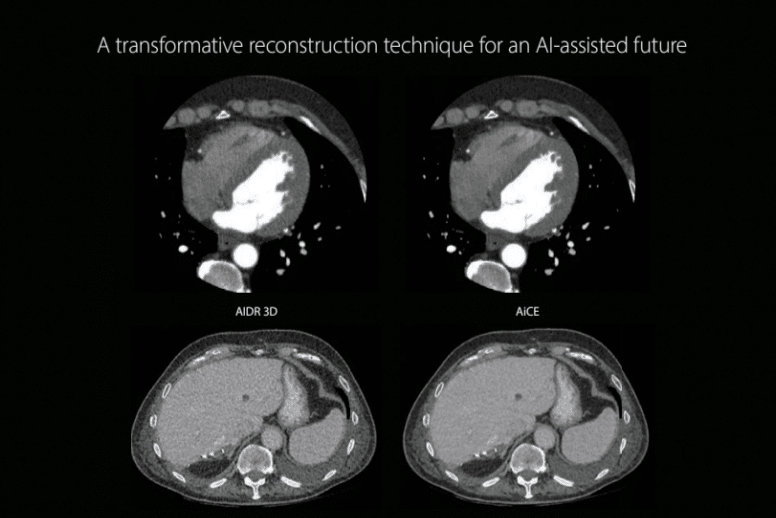
Canon Medical introduces a revolutionary approach to CT reconstruction that leverages Deep Learning Neural Networks specifically trained to perform one task – reconstruct images that are sharp, clear, and distinct.

Cardiac CT for Coronary Heart Disease treatment in Melbourne

Cardiac CTs are very good for diagnosing Coronary Heart Disease/Coronary Artery Disease (CAD) and detecting blockages in the coronary arteries (blood vessels) that supply blood to the heart muscle. The scans can identify the extent of damage to the heart muscle, and the degree of blockages and blood flow in your coronary arteries to guide appropriate treatment, whether this is further tests, a procedure or medication.

Early detection of heart disease can catch potential heart attacks.

The Aquilion ONE GENESIS allows our cardiologists to measure your calcium score. This shows us how much calcium and hardening, or calcium-containing plaque, is in the walls of your coronary arteries, allowing us to estimate your risk of a heart attack or stroke. A CT calcium score is often recommended for asymptomatic patients, who have an intermediate to high risk of cardiovascular events (heart attack).

This enables lifesaving early intervention and management of a potential heart attack before any symptoms are evident. Using medications, risk management and lifestyle changes we aim to prevent any significant cardiac events from happening.

Why Melbourne Heart Care uses the revolutionary Aquilion ONE GENESIS for CT coronary angiogram scans

At Melbourne Heart Care, we are committed to early identification and risk management for our patients to help prevent life-threatening heart issues in the future. The Aquilion ONE GENESIS uses cutting-edge technology to provide clear and precise imaging of your heart. We have a strong legacy with the Aquilion CT machines at Monash Heart and Victoria Heart Hospital. This state-of-the-art technology helps guide and optimise diagnoses and management of cardiac issues and chest pain, and identify at-risk asymptomatic patients.

Stand-out features:

  • 16cm wide area detector captures high-quality images of the whole heart in one fast rotation.
  • 640 slice volume detector gives clear pictures with a high level of detail.
  • Dynamic functional imaging provides valuable insights to optimise cardiac disease treatment.
  • Optimised X-Ray spectrum for a patient-specific beam for more homogenous distribution.

Patient benefits:

Compared to other CT machines, the Aquilion ONE GENESIS has:

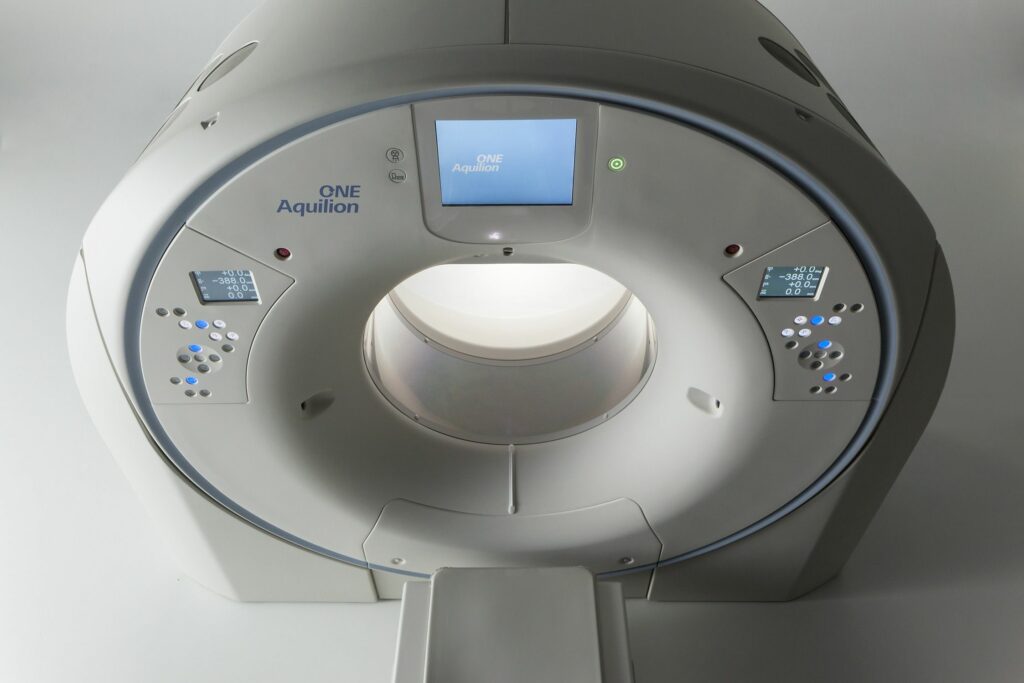
  • A wider gantry opening at 78cm with a large table for patient comfort.
  • Lower radiation dose.
  • A quicker set-up and scan time.

How is the cardiac CT performed?

A CT coronary angiogram is a simple procedure. Your doctor will provide instructions prior to your scan, such as if you need to stop or start certain medications, and avoid caffeine or energy drinks the evening before and the morning of your scan. You will also need to fast for 2 hours.
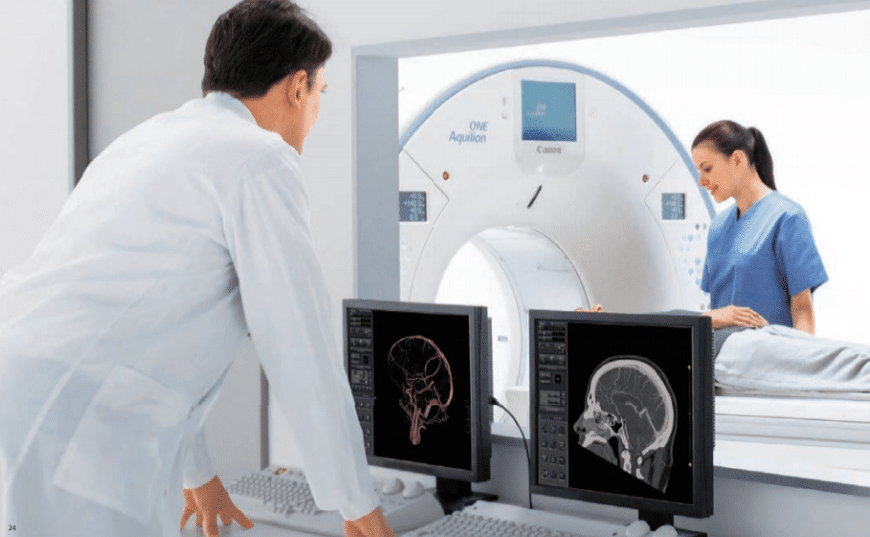
Melbourne Heart Care uses cutting-edge technology, the Aquilion ONE GENESIS, for fast, accurate CT images.

On the day you can expect:

  • A cannula will be inserted into a vein for a contrast injection (dye).
  • If your heart rate is above 65 beats per minute we may need to give you some medication, either orally or through the cannula, to slow your heart rate down. This is so the CT scanner is able to get the clearest pictures possible.
  • You will be asked to lie on the CT scanning table and stay as still as possible for the duration of the scan as movement can blur the images.
  • We may also ask you to take a breath in and hold it at different stages of the scan.
  • After the contrast injection is given you may feel hot, flushed or experience a metallic taste. These are common reactions to the contrast dye.

We advise that you have someone to drive you home after your scan as the beta-blocker medication can sometimes lower your blood pressure and may cause light-headedness.

What is the cost of having a CT scan for your heart at Melbourne Heart Care?

A CT coronary angiography is covered by Medicare when organised by one of our cardiologists at Melbourne Heart Care. However, a CT calcium score will incur a fee as there is currently no Medicare rebate or bulk bill protocol for this test.

Why choose Melbourne Heart Care?

Here at Melbourne Heart Care, we are committed to providing high-quality, professional cardiac care for all our patients. We use cutting-edge technology to assist in accurate and timely diagnosis, backed by our experience and knowledge of cardiac disease and intervention.

Contact Us

Please don’t hesitate to contact Melbourne Heart Care’s dedicated team to manage your cardiology care or that of your patients. Appointments can be made by contacting the practice via phone. Referrals can be sent via Argus, Email or Fax.
  • Phone: 03 9592 2177
  • Fax: 03 9592 3177
  • Postal Address: Suite 16, 3 Male Street, Brighton 3186

Where to find us

We provide consultations and a comprehensive range of tests and treatments at our modern facilities, private hospitals or a public hospital near you.

Frequently Asked Questions

You can find answers to common questions about cardiac CTs and calcium scoring below.

CT coronary angiogram has a 91% accuracy in detecting blockages and calcified plaque in your heart’s blood vessels (coronary arteries). Cardiac CT is a great diagnostic tool for any patient with symptoms such as chest pain, who we suspect has plaque buildup in their heart arteries.

Here at Melbourne Heart Care, we use CT calcium scoring as a screening test to predict the risk of a heart attack in our patients. If you have a build up of calcium, or high calcium score, you have an increased risk of heart attack in the future.

A positive stress echocardiogram, or other symptoms such as chest pain, may suggest you have blockages in your heart arteries, and we may recommend a CT angiogram, or cardiac CT, to provide more detailed images of your heart and coronary arteries.

Yes, a CT can detect if your heart has inflammation. We can use cardiac CT images to diagnose illnesses such as myocarditis or pericarditis, which are inflammation of different areas of your heart.

Your doctor or cardiologist will refer you for a coronary CT if you have had an inconclusive stress echocardiogram, or chest pain, or a strong family history of heart conditions with or without symptoms, or as part of a work-up for surgery. A coronary CT is an excellent test for showing the coronary artery anatomy, including detailed images of the coronary artery walls, showing even small amounts of coronary plaque. This allows early detection, and treatment if necessary to prevent progression of this coronary disease.

A contrast is used to highlight the coronary arteries, a CTa is contraindicated in patients with significant renal (kidney) impairment or prior anaphylaxis to contrast. Our nursing team will ask you questions and organise a blood test to assess for these issues before your scan.
If you have classic symptoms of coronary disease, such as exertional chest pain, and likely have coronary disease, a coronary angiogram is usually recommended as narrowing can be treated at the same time.

Although the dose of radiation is very low, you should not have a cardiac CT scan if you are pregnant. Please discuss this with your doctor or cardiologist, as there are other tests that may be more suitable when pregnant.

At Melbourne Heart Care, we use the latest in technology, the Aquilion ONE GENESIS. This cutting-edge CT scanner provides clear, accurate imaging in less time than older models and is designed for patient comfort with a lower radiation dose and wider scanning table.

You will be provided with pre-procedure advice that we ask you to follow carefully to ensure a successful and accurate scan of your heart. To prepare you should avoid caffeine, energy drinks, tea or coffee for 24 hours before your scan. In addition, we may prescribe a beta-blocker medication to slow your heart rate, taken the night before and morning of your scan. Further medication may be given just prior to your scan, to keep your heart rate low, for an accurate image.

You need to be fasting for two hours prior to a cardiac CT. As your heart rate needs to be less than 60bpm, for a clear image of your coronary arteries, please avoid caffeine or vigorous activity on the day of your cardiac CT.

The preparation for a CT calcium score is much simpler than a coronary CT, as no fasting or special preparation is required.

An intravenous cannula ill be placed in your arm, to give the contrast. Then you lie on the CT scanner bed, and the contrast dye is given. It causes a sudden wave of warmth over your body: sometimes it can feel like you have wet yourself. The CT scanner takes some images over the next few minutes. The CT scanner is a large ring, so there is no sense of claustrophobia.  Once the images are taken you can sit for a while, to make sure you feel ok.
After your cardiac CT, you will be able to drive home. Sometimes medication we give you, to lower your heart rate, can lower your blood pressure, but rarely cause any symptoms. Our cardiac nurses will measure your blood pressure and heart rate frequently, before and after your scan, and can advise when you are able to head home. If you have any concerns, our nurses can answer your questions. You are welcome to stay until you feel ready to leave.
The CT calcium score scan takes about 10 to 15 minutes, however, please allow an hour for the entire process. If the calcium score is combined with a scan of your heart arteries with contrast (for more detailed information), the procedure length will be slighty longer.
There is a small risk of an allergic reaction to the contrast injection. Our cardiologists are on site every day to manage any symptoms. Some people may experience lower blood pressure if the beta-blocker is used to slow your heart rate down. There is a very low dose of radiation during the scan, so if you are pregnant or may be pregnant, please discuss with our cardiologist prior to the scan.  Any risks will be discussed in-depth with our team. There is no contrast injection (dye) needed for a CT calcium score.
It is common to feel nervous when attending a cardiac test, like a cardiac CT. Our friendly team will look after you, and are very experienced at achieving the low heart rate required for a detailed image of your coronary arteries. Our cardiac CT nurses will be able to answer any questions you have, and our cardiologist can prescribe medication to reach a heart rate less than 60bpm.
For your CT scan appointment, you will need to bring your Medicare Card, a referral from your doctor or cardiologist, and any healthcare card or pension card.
You may be given an injection of contrast through the cannula in a vein of your arm during this test. This helps create pictures of the blood flow and cardiac structures during the CT scan. You will not need this injection if you are only doing a calcium-scoring test.
If you have an allergy to contrast or severe kidney issues, we may be able to perform the CT without dye. However, the results may not be as accurate or clear. Your doctor will assess the need for contrast and will order an alternate test for you, if you can not have the contrast. A calcium-scoring test that does not require contrast.
Our cardiologist is able to report the cardiac CT scan immediately. A report will be sent to your referring doctor within 24 hours. If your cardiac CT was requested by your cardiologist, it is best to contact them for the results. Your GP will also receive a copy.
Medicare has strict criteria for CT angiogram rebates, based on specific symptoms and cardiovascular risk categories. A coronary CT is covered by Medicare if you have symptoms, and the CT scan will help diagnose or exclude coronary disease as a source of the symptoms. Our cardiologist will consider these factors during your consultation to make sure there are no surprise costs.
Australia’s Medicare system restricts rebates for cardiac CT (CT Coronary Angiography) strictly to specialist (cardiologist) referrals. Melbourne Heart Care offer a rapid access chest pain clinic, to reduce the time taken to sort out your symptoms. A GP referral is required, and you will be seen within a week, with a coronary CT. You may prefer to pay the whole fee for a coronary CT scan, to have your scan quickly without seeing a doctor. Medicare will only cover the coronary CT if the referral is requested by a cardiologist.
Symptoms that could be related to heart disease can be terrifying. A coronary CT is an excellent test to sort out chest pain or heaviness, jaw and neck tightness, or exertional chest symptoms. Our rapid access chest pain clinic can help manage this situation, with referral from your GP.
Yes, you can develop coronary disease, and heart artery narrowing with a normal cholesterol level. There are several other non-cholesterol risk factors, such as family history (genetics), that cause heart disease. A coronary CT can measure the burden of coronary plaque and narrowings in your arteries, allowing treatments to prevent progression.
A stress echo is a very good test to assess your heart in action. Sometimes you may not be able to complete sufficient treadmill exercise to rule out underlying coronary disease. This is called an equivocal test, as a definite answer of normal or abnormal can not be made. A coronary CT shows detailed images of your arteries to answer that question. A cardiac CT can be very reassuring, if the question of possible coronary disease arises, as it gives an exact answer.
A coronary CT shows detailed images of your heart arteries, to assess for narrowings as a cause of chest pain or other symptoms, while a calcium score is a risk predictor. The choice of test depends on symptoms. You will get a calcium score with the coronary CT
REQUEST AN APPOINTMENT CALL US
REQUEST AN APPOINTMENT